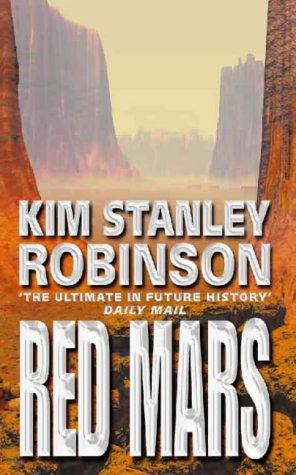
Someone compared this to Moby Dick for interplanetary fiction and I can’t improve on that, it’s exactly right, you get whale-anatomy levels of detail on Martian geology and terraforming chemistry the same way Melville gives you the whaling industry, and it takes roughly the same commitment to get through. I spent close to three months on this one, on and off, which is longer than I usually give any single book, and I don’t regret a page of the slow parts, though I understand completely why some readers put it down.
What Robinson does that I haven’t seen matched anywhere else is make the space elevator and the soil chemistry and the habitat engineering feel like actual labor, not scenery. The hundred colonists split almost immediately into ideological factions over what Mars should become, terraform it fully versus leave it wild, and that argument runs under every scene, coloring even the quiet technical passages with real stakes. The Russian and American crew dynamic in the early chapters grounds it further, it’s not just abstract politics, it’s specific people who distrust each other’s governments arguing about dirt.
Where I split from the five-star crowd a little: the character work is uneven, some of the ensemble stays vivid the whole way through and a few blur together by book two of the trilogy. But the ideas carry it regardless, and when the planet itself starts to change, subtly at first and then all at once, I felt genuinely moved by something that’s mostly chemistry and infrastructure on the page. Rare for hard sci-fi to pull that off. This one does.