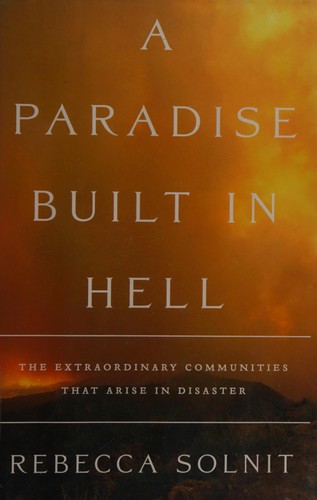
Solnit’s thesis is simple to state and genuinely uncomfortable once you sit with it: when disaster hits, ordinary people mostly help each other, form spontaneous mutual aid, share what they have, and the actual danger comes from authorities who assume the opposite and respond with force to a panic that isn’t happening. She calls it elite panic, the gap between what officials fear a crowd will do and what it actually does, and once you’ve got that phrase in your head you can’t unsee it in every disaster movie you’ve ever watched, all the looting and mass hysteria that supposedly happens and mostly doesn’t.
The San Francisco earthquake chapter is the best thing in the book, and the Halifax explosion material right behind it, and I’ll admit going in I already agreed with her basic premise, which is exactly the trap one review I read points at, that starting from a conclusion you already hold makes four hundred pages feel long. It does drag in the middle third. But her sentences are doing something structurally unusual too, I noticed myself rereading passages not because they were confusing exactly but because they genuinely don’t land where you expect, they turn a corner mid-thought that a plainer writer wouldn’t risk.
Where I think the critics have a point is that this reads as personal argument dressed as research more than once, her politics aren’t hidden and she’s not trying to hide them, so if you want dispassionate you won’t get it here. I didn’t need dispassionate. The Katrina and 9/11 chapters toward the end hit harder than the earlier historical ones precisely because the stakes are recent enough to still sting, and I closed the book thinking about my own town’s emergency plan differently than I had going in, which is more than most nonfiction manages.